

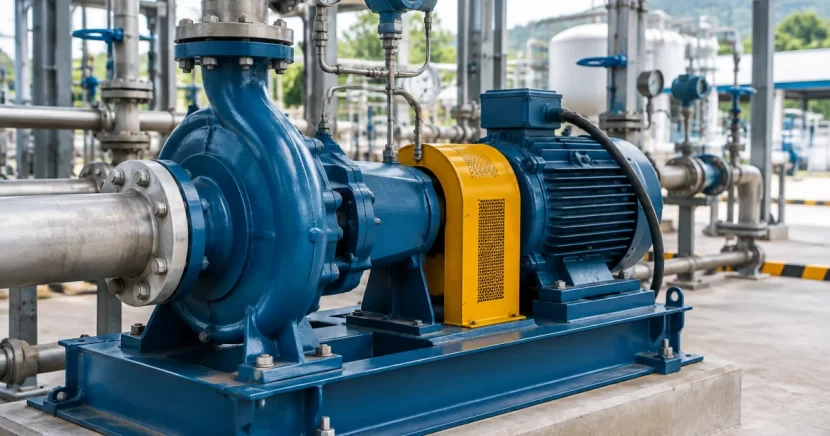
When you’re tendering or executing a project, the quickest way to slow commissioning is an RFQ that leaves key pump details open to interpretation. Suppliers will either quote “standard” options that don’t match your system curve or respond with long clarification lists that delay evaluation. This checklist is a repeatable way for contractors and procurement teams to request, compare, and award centrifugal pump packages with fewer assumptions.
If you are sourcing Centrifugal Pumps Malaysia for building services, industrial utilities, process transfer, or booster systems, use the sections below to lock the duty point, materials, motor/electrical scope, and delivery inclusions so quotations remain comparable.
How to use this: paste the headings into your RFQ, fill what you know, and mark unknowns as “to be confirmed” while stating assumptions. The goal is an RFQ complete enough to purchase without redesign later.
1) Define the duty point clearly (and how it was derived)
Most quote mismatches come from an incomplete hydraulic duty definition. A centrifugal pump is selected at a duty point (flow and total dynamic head), then checked for NPSH, efficiency, and operating range. Avoid vague requests like “pump for water supply”—they produce non-comparable offers.
Duty point essentials to include
- Flow rate: state units (m³/h or L/s) and, if relevant, min/normal/max.
- Total Dynamic Head (TDH): state in meters and include the basis (static + friction + minor + equipment losses + margin).
- Operating pattern: continuous/intermittent, batch, duty/standby sequencing, variable demand.
- System type: open discharge, closed loop, booster distribution, tank-to-tank transfer.
Why it matters: suppliers size to the rated duty point and aim to keep operation near best efficiency. If “normal” duty isn’t defined, the selected impeller may place operation too far left/right of the curve, increasing vibration, recirculation, heat rise, or instability.
Don’t forget NPSH and suction conditions
- Fluid temperature (vapour pressure impact).
- Suction source: flooded tank, suction lift, or pressurised header.
- Suction line constraints: long runs, undersized pipe, or bends near the suction nozzle.
- NPSHa if available; otherwise provide elevations/levels and suction piping details so it can be estimated.
If suction head is tight, flag it early so the supplier can propose a suitable configuration (for example, a vertical arrangement) rather than forcing an unsuitable end-suction selection.
2) Specify the pumped liquid and compatibility (water vs chemicals)
“Water” can still mean condensate, chilled water with additives, seawater, wastewater, or washdown water—each affects materials and sealing. For chemical or corrosive fluids, your RFQ must be explicit to avoid late redesign.
- Liquid name/description: treated water, cooling tower water, RO permeate, condensate, mild alkaline solution.
- Chemistry: pH/concentration, chlorides, solvents, oxidisers (as applicable).
- Solids: presence, approximate size, abrasiveness, fibrous content (identify if sewage/slurry capability is required).
- Temperature: min/normal/max.
- Viscosity and specific gravity if not water-like; note if estimated.
Where this helps: aggressive liquids may require chemical-duty designs, magnetic drive options to reduce leak risk, or specific elastomer/metal selections. Keep alternatives in mind, but maintain a clear centrifugal pump scope so the quote remains comparable.
3) Materials of construction: specify “wetted parts” and standards
To compare offers, define expectations for all wetted components. Broad terms like “SS” or “cast iron” are interpreted differently and can hide substitutions.
Checklist for materials
- Casing/cover: ductile iron, bronze, stainless steel, or other grade.
- Impeller: closed/semi-open and material grade.
- Shaft and sleeve: materials and whether sleeves are replaceable.
- Wear rings (if applicable): material and replaceable type.
- Fasteners: corrosion class/grade where relevant.
- Elastomers: O-rings/gaskets (EPDM, FKM/Viton, NBR, PTFE, etc.).
- Coatings/linings: epoxy, rubber lining, or special lining if required.
Practical note: many premature failures are caused by a small mismatch (wrong elastomer, unsuitable sleeve, unexpected chloride exposure). If equivalents are acceptable, say so (e.g., “SS316 or equivalent subject to compatibility confirmation”) while requiring suppliers to state exact grades in the quote.
4) Mechanical configuration: pump type, sealing, and bearings
Locking the pump arrangement and seal expectations keeps offers aligned to safety, leakage, and maintenance requirements.
Pump hydraulic type and construction
- Configuration: end-suction, split-case, vertical in-line, vertical multistage, close-coupled, or long-coupled on baseplate.
- Mounting: baseplate with coupling/guard vs close-coupled (space-driven).
- Stages: single-stage or multistage.
For high-head booster duties, state whether a vertical multistage arrangement is intended/acceptable so suppliers don’t propose series pumps when a multistage unit fits the duty.
Sealing expectations
- Seal type: single mechanical seal, double mechanical seal, or seal-less magnetic drive (where appropriate).
- Seal faces/elastomers: specify for hot, solvent-based, or chemically aggressive service.
- Flush plan: if required, state whether external flush is available and the flush fluid.
Why it matters: leaving seals open often results in low-cost “standard” selections that struggle in real operation, increasing leakage and downtime.
Bearings and lubrication
- Lubrication: grease or oil (as per design), plus any preferred maintenance approach.
- Ambient: indoor/outdoor, dusty, washdown, temperature extremes.
- Run hours and access: expected duty cycle and maintenance constraints.
5) Motor, electrical, and controls: avoid “supply only” gaps
Many site delays come from unclear scope boundaries between pump, motor, starter/VFD, instrumentation, and wiring. Define responsibilities so quotes match your delivery model.
Motor and power supply details
- Motor rating: kW/HP and required margin/service factor.
- Power supply: voltage, frequency, phase (site standard).
- Protection: enclosure type, IP rating, insulation/efficiency class if your project specifies them.
- Area classification: hazardous/non-hazardous and any certification requirements.
Variable speed and instrumentation
- VFD: yes/no; if yes, state control method (constant pressure, flow, DP control, etc.).
- Minimum flow/speed constraints to avoid low-flow overheating.
- Instruments: gauges/transmitters, flowmeter, temperature, vibration monitoring (if required).
6) Delivery scope: what must be included in the quoted package
Two offers using similar pump models can differ greatly in included items. Spell out inclusions so you can evaluate like-for-like, especially for skid packages and fast-track jobs.
Package inclusions to state
- Pump and motor as a matched set (state if motor is by others).
- Baseplate, coupling, coupling guard, fasteners (for long-coupled sets).
- Accessories: check valve, isolation valves, strainer, flexible connectors, dismantling joint (as required by your standard).
- Instrumentation and electrical items within scope (junction box, glands) if included.
- Spare parts: mandatory spares (seal kit, bearings, wear rings, gaskets) and commissioning spares.
- Documentation: datasheets, GA/sectional drawings, curves, wiring diagrams, O&M manuals.
Testing and inspection (FAT/SAT) clarity
- Performance testing: required/not required and acceptance/tolerance (or “manufacturer standard”).
- Material certificates: required/not required.
- Witness testing: client/third-party witness expectations.
Practical note: on tight commissioning schedules, the difference between “pump only” and a tested, documented pump set can be weeks. Make requirements explicit so lead times are realistic.
Delivery schedule and commercial clarifications
- Required delivery date and whether partial shipments are acceptable.
- Delivery location: site address, access constraints, unloading responsibility.
- Warranty basis: from delivery vs from commissioning (or request supplier standard).
Fast RFQ template you can paste into an email
Use this compact format to reduce clarification cycles while keeping the quote technically safe.
| RFQ Item | What to state |
|---|---|
| Service | Application (booster/circulation/transfer), operating hours, duty/standby philosophy |
| Duty point | Flow (min/normal/max), TDH (basis), suction condition, temperature, NPSHa (if available) |
| Liquid details | Fluid name, SG/viscosity (if needed), solids, pH/concentration (if chemical), corrosivity notes |
| Pump type | End-suction / split-case / vertical in-line / vertical multistage; close/long coupled |
| Materials (wetted) | Casing, impeller, shaft/sleeve, elastomers; coating/lining requirements |
| Seal | Single/double mech seal, seal materials, flush requirements (if any) |
| Motor & electrical | kW, voltage/frequency, IP/enclosure, control (DOL/star-delta/VFD), hazardous area (if any) |
| Accessories | Baseplate/coupling guard, valves/strainer, gauges/transmitters/flowmeter (if needed) |
| Testing & docs | Performance test, GA drawings, curves, O&M manuals, certificates |
| Delivery | Required date, delivery point, packing, partial shipment acceptance |
| Services | Installation/alignment, testing & commissioning, on-site troubleshooting (if required) |
Conclusion: get comparable quotes, faster approvals, fewer site surprises
A “fast RFQ” isn’t just shorter—it’s complete enough to remove ambiguous assumptions. By stating duty point and suction conditions, liquid properties, wetted materials, seal expectations, motor/control scope, and delivery inclusions, you enable accurate supplier proposals and a clean technical-commercial comparison. Start with the template, then add your project standards (preferred brands, inspection points, documentation format) to keep procurement predictable from RFQ to commissioning.
Frequently Asked Questions
What is the minimum information suppliers need to quote a centrifugal pump accurately?
At minimum: flow rate, total dynamic head, liquid type and temperature, suction condition (flooded or lift), and the requested pump configuration (end-suction, vertical in-line, split-case, etc.). To avoid hidden scope gaps, also state wetted materials expectations, seal type, motor power supply details, and what accessories/documentation must be included.
How do I specify the duty point if I only know the pump size from a previous project?
Ask for a re-check rather than copying the old pump size. Provide your best available inputs (tank levels/elevations, pipeline lengths and diameters, expected flow range, and equipment losses), then request the supplier to propose a pump curve and impeller diameter for the calculated duty point. Make your assumptions explicit so any later changes can be traced and updated quickly.
When should I consider a vertical multistage pump instead of an end-suction centrifugal pump?
Vertical multistage pumps are often considered when you need relatively high head at moderate flows, compact footprint, and a clean water service such as booster or circulation duties. In an RFQ, state the required head, flow range, space constraints, and whether variable speed control (VFD) is planned so suppliers can propose the most suitable configuration.
What materials should I request for an industrial water pump in a corrosion-prone environment?
Start by describing the water quality (chlorides, additives, temperature, and any solids). Then specify minimum wetted materials for casing and impeller (e.g., corrosion-resistant stainless or other suitable grade), plus compatible elastomers for seals and gaskets. If you are unsure, request the supplier to recommend wetted materials based on your liquid details and to list exactly what grades are offered in the quotation.
Do I need factory testing and documentation for every pump order?
Not always, but you should decide based on project risk. For critical services, tight commissioning windows, or performance-sensitive systems, requesting a factory performance test and complete documentation (GA drawings, curves, O&M manuals) can reduce site troubleshooting. For less critical duties, you may accept manufacturer standard testing while still requiring basic curves and datasheets for approval and handover.
Need a faster, cleaner pump RFQ and quotation review?
M.E.T. Motion Engineering & Trading Sdn. Bhd. supports contractors with end-to-end pumping solutions—pump selection, complete pump system fabrication, diagnostic/consulting, maintenance & repair, and on-site installation, testing & commissioning. If you share your duty point and site constraints, our technical team can help validate the selection and package scope so you receive comparable quotations and fewer site-stage surprises.
